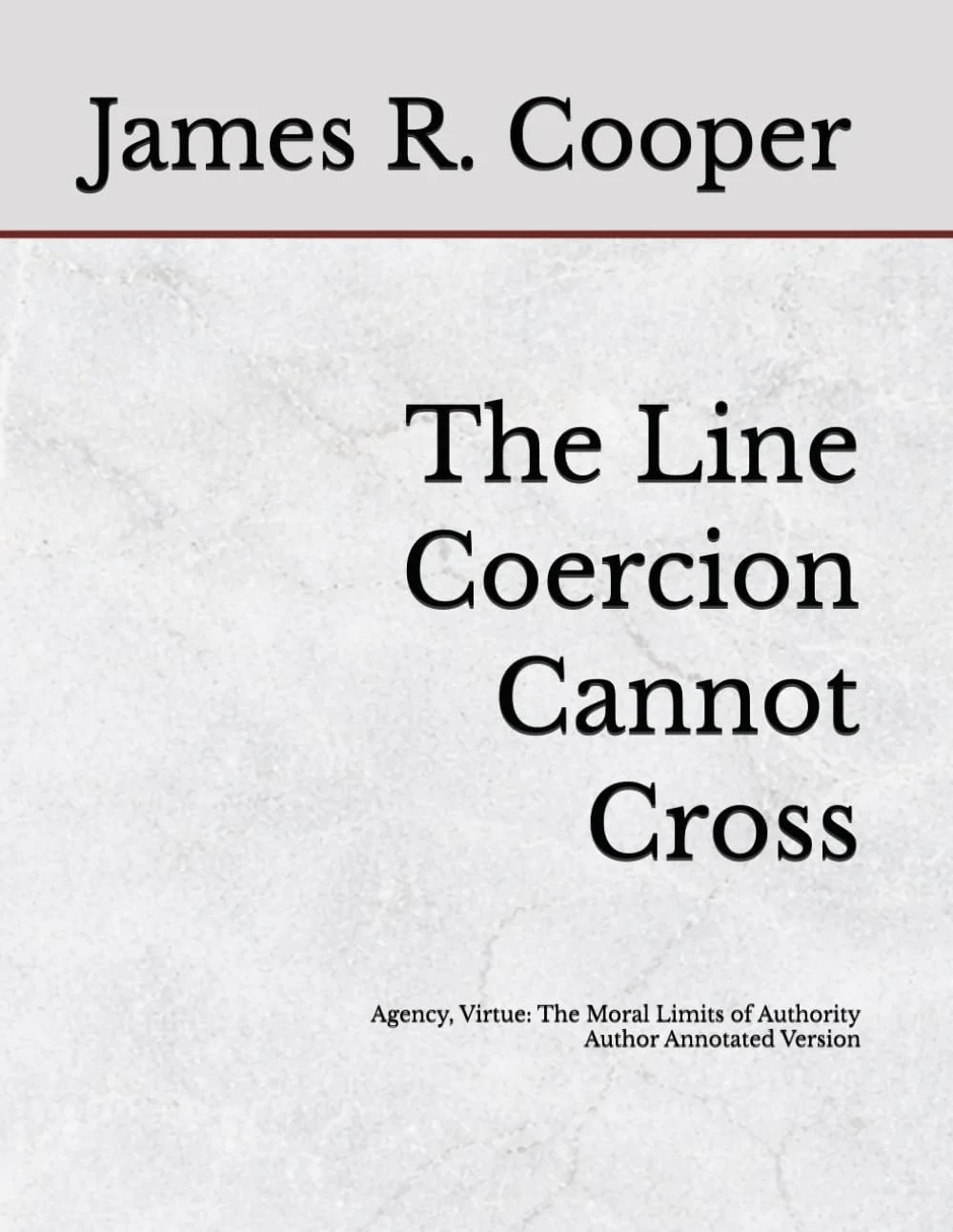
The Line Coercion Cannot Cross
Agency, Virtue: The Moral Limits of Authority
by James R. Cooper
The Line Coercion Cannot Cross is a book about agency, virtue, and the moral limits of authority.
Its central claim is simple: where choice is overridden, virtue does not weaken. It disappears.
James R. Cooper argues that moral goodness requires genuine agency. A person must be able to choose freely and bear responsibility for what those choices make of them. Once coercion, control, or imposed outcomes replace authorship, virtue gives way to compliance and moral growth becomes incoherent.
Drawing on Latter-day Saint doctrine, Objectivist moral philosophy, and creedal Christianity, the book examines how different moral frameworks understand freedom, obedience, responsibility, and authority. It asks what those frameworks permit or require once agency is taken seriously as a binding condition of moral life.
The book also offers a constructive account of authority. Legitimate authority does not replace judgment or override choice. It clarifies truth, preserves responsibility, and sustains the conditions under which real goodness can be chosen.
This book is written for thoughtful readers, especially Latter-day Saints, who want a deeper account of agency, obedience, discipleship, and moral responsibility. It will also interest readers of philosophy and theology who are concerned with how institutions, traditions, and systems shape human behavior without destroying the freedom that makes virtue possible.
About the Author
James R. Cooper is a lifelong member of The Church of Jesus Christ of Latter-day Saints and an independent writer working at the intersection of agency, moral responsibility, and moral philosophy.
He writes as a serious reader of both Restoration doctrine and non-LDS moral thought, with particular interest in questions of freedom, coercion, authority, and the conditions that make virtue and accountability possible. His work is shaped by sustained engagement with philosophical and theological traditions both inside and outside his own faith.
Rather than dismissing rival systems or borrowing from them uncritically, Cooper seeks to examine them seriously, identify where they illuminate real moral problems, and show where they diverge at the level of first principles. His writing is marked by a particular concern for the moral meaning of agency and for the line authority cannot cross without undermining the very goodness it claims to serve.
Contact Us
If you would like a digital or paperback ARC of The Line Coercion Cannot Cross, or if you have questions or feedback about the book, please use the form below. Indicate whether you would like a digital or paperback copy. For paperback requests, please include your mailing address.