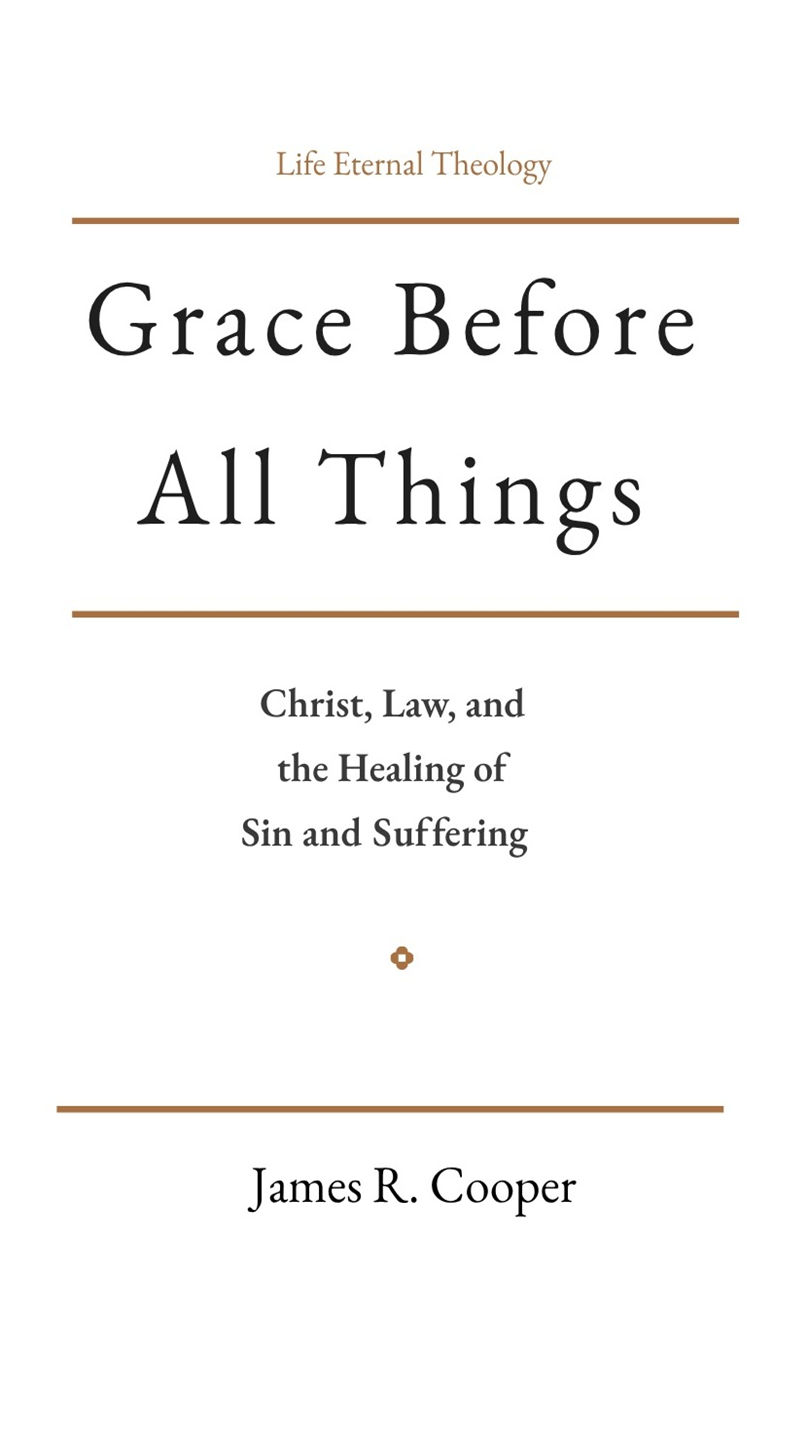
Grace Before All Things cover
Life Eternal Theology

Grace Before All Things

Christ, Suffering, and the Lawful Healing of Sin

Grace is not what God offers after justice has set harsher terms. It is His first and original action in Jesus Christ, preceding law, preceding sin, preceding the world itself. This book argues that grace must be understood as the structural context for everything else: sin, suffering, justice, judgment, and redemption. Only by placing grace first can Latter-day Saints escape the burdens that come from placing justice first and treating grace as an afterthought.

Available Now

Ten Claims, Built in Order

Each chapter introduces a claim that depends on the one before it. The argument does not scatter; it builds. By the final section, every part of the doctrinal system — grace, sin, suffering, justice, mercy, judgment, and redemption — has been reordered under the one that should have been first.
I
Grace is original, not remedial. It is the primordial gift of light and truth in Christ, given before creation, not offered as a last resort after justice has spoken.
II
Grace calls forth response. Though unearned, it actively invites repentance and humility. Pride is an anti-grace posture: not mere vanity, but a will set against God.
III
Sin is soul damage. It is not merely disobedience but a wound to the soul requiring healing. Repentance is therefore a healing process, not only a legal transaction.
IV
Suffering is not guilt. Severe affliction cannot be read backward as evidence of sin. The book distinguishes non-authored suffering from morally entangled suffering, and rejects both as evidence of divine punishment.
V
Christ heals and succors all. Having borne pains and afflictions of every kind, He knows how to succor according to infirmity. His ministry extends inward through the Comforter.
VI
Resurrection is grace for the whole person. It restores the body and completes the healing that mortality leaves unfinished, answering forms of suffering this life cannot resolve.
VII
Grace operates lawfully, not arbitrarily. God respects moral order and agency. Mercy functions within eternal law, not by waiving it. Grace is not sentiment; it is ordered love.
VIII
Mercy does not rob justice. Justice is restorative and preservational, not merely punitive. Christ satisfies justice without annulling it; mercy and justice are friends, not opponents.
IX
Final judgment reveals and ratifies. It is not an arbitrary decree but a recognition of what souls have become. Judgment is the moment moral authorship is made visible.
X
Redemption is the final answer. All strands converge: Christ's atonement heals sin, answers suffering, and restores creation. Redemption is not escape from the world but its transformation.

Written for Those Carrying Real Burdens

This book is written for Latter-day Saints who have found that their understanding of justice leaves little room for grace, who have read suffering as evidence of divine disappointment, or who have quietly concluded that the Atonement is available to everyone except themselves.

It is also written for those who counsel others — bishops, parents, teachers, friends — who need a clearer doctrinal framework for addressing sin and suffering without producing shame, despair, or the false equation of affliction with guilt.

It is a work of doctrinal theology, not self-help. It does not offer quick comfort. It offers a reordered framework — one that places grace where it belongs: first, lawful, and sufficient.

Now Available
▶  Grace Before All Things: Audiobook

The complete audiobook, narrated in the author's own voice. Downloadable MP3. $14.99.

Get the Audiobook

Read This in Christ

About Section 11

The final section of Grace Before All Things is not a summary. It is an application. Each of the book's ten doctrinal claims — original grace, sin as soul damage, non-authored suffering, Christ as healer, lawful mercy, recognitive judgment, and redemption — is brought to bear on the situations readers actually face. Section 11 is where the theology touches the ground. The tool is its digital extension: a way to apply the framework to your specific situation, in your own words, and receive a structured response drawn from the book's doctrinal architecture.

The framework in Grace Before All Things is built to be applied. You describe your situation. The tool draws on the book's ten doctrinal claims and the application logic of Section 11 to produce a structured theological response — one grounded in grace, drawn from scripture, and addressed to what you are actually carrying.

"The tool does not answer, 'Why did this happen?' It answers, 'How must this be read in Christ?'"

The Situations People Actually Bring

The tool is built for real situations — not hypothetical theological exercises. Below are examples of the kinds of questions people bring to it. Each one receives a structured response drawn from the book's doctrinal framework, grounded in grace and addressed to the specific burden described.

1

"I've sinned seriously and I'm not sure grace still applies to me. I know the doctrine, but I can't feel it."

2

"I made a serious mistake years ago. I've repented. But the shame has never fully left, and I don't know what to do with what remains."

3

"I keep committing the same sin. I wonder if the Atonement has limits for someone like me."

4

"I'm experiencing severe suffering I did nothing to cause. I need to understand why God would let this happen, not just comfort."

5

"My child died and I carry grief that prayer hasn't lifted and time hasn't resolved. I don't know where to go or what to do."

6

"My calling feels larger than who I am. I'm not sure I'm spiritually adequate for the people I'm responsible for."

7

"I counsel others through serious sin and suffering, but I feel doctrinally underprepared to help them without causing harm."

8

"I'm afraid that if God knew me fully — really knew me — He would withdraw His love."

9

"How much do I have to do to repent and be faithful for grace to work in my life?"

Companion Framework
Read This in Agency

The companion tool to Read This in Christ. Where this tool reads situations through grace, suffering, and Christ's redemptive presence, Read This in Agency reads the same situations through agency, authorship, and the line coercion cannot cross. The two frameworks are designed to complement each other.

Explore Read This in Agency

What Readers Are Saying

Reader responses will appear here as they are received.

Have you read Grace Before All Things? Share your response with the author. Selected responses may be featured on this page.

Write to the Author