All Books
Life Eternal Theology Grace Before All Things The Line Coercion Cannot Cross Knowing God as He Is Divine Governance
Theological Meditations Take My Yoke Upon You
Audiobooks
All Tools
Read This in Christ Read This in Agency
About Contact
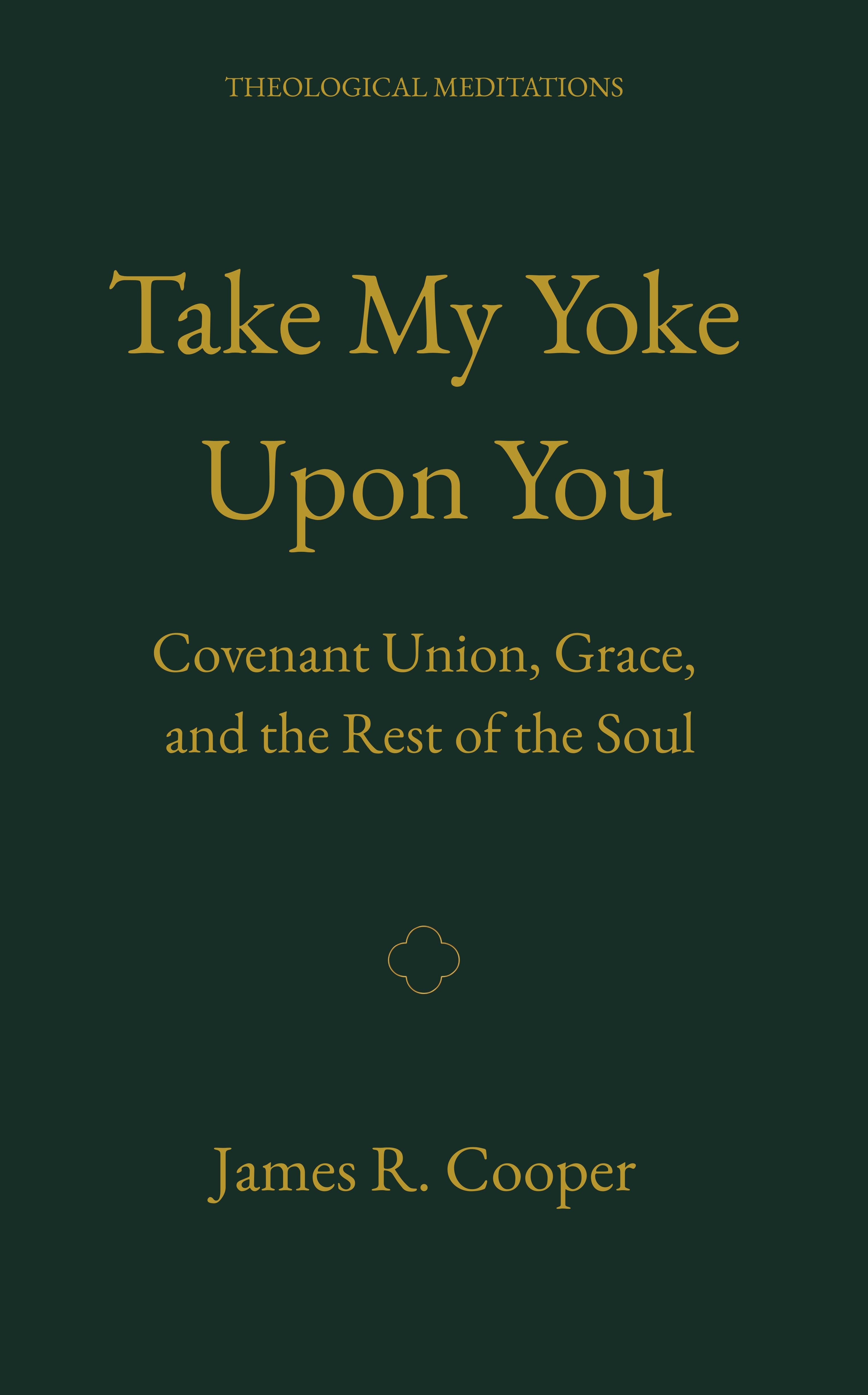
Take My Yoke Upon You cover
Theological Meditations

Take My Yoke Upon You

Covenant Union, Grace, and the Rest of the Soul

Most readers know Christ's invitation: "Come unto me, all ye that labour and are heavy laden, and I will give you rest." Yet Christ places something unexpected at the center of that promise. He invites the weary not merely to receive relief, but to take His yoke.

Take My Yoke Upon You explores Matthew 11:27-30 as a single movement. The Son reveals the Father. The weary are invited to come. They take His yoke, learn of Him, and find rest. Drawing on scripture, Restoration doctrine, and the teachings of modern prophets and apostles, this book argues that Christ's yoke is covenant union with Him. Through that union, grace strengthens participation, learning becomes transformation, and the soul finds rest in God.

Available Now

Fifteen Chapters, One Movement

Each chapter follows the order Christ Himself gives: come, take, learn, find. The book remains close to the passage and follows the Savior's own sequence rather than scattering across topics.

By the conclusion, the yoke, grace, covenant union, discipleship, and rest are shown to belong together. What begins as an invitation to the weary becomes a vision of covenant life centered in Jesus Christ.

I
More than a promise of relief. Christ does not begin with burdens. He begins with a yoke. The distinction between burden and yoke is the key to the entire passage.
II
The forgotten context: revealing the Father. Matthew 11:27 precedes the invitation. The Son reveals the Father before the weary are invited to come. Revelation precedes rest.
III
Come unto me. Relationship precedes covenant. Christ begins with invitation because trust cannot be manufactured and covenant cannot be forced.
IV
What a yoke actually does. A yoke is not a tool for carrying weight. It is a tool for joining. Its first purpose is union, not labor.
V
Why a yoke instead of independence. The alternative to Christ's yoke is not freedom. It is another master. The question is never whether we will serve, but whom.
VI
Yielding without disappearing. Submission to Christ does not erase the disciple. It teaches the self what it was created to be. The disciple yields without disappearing.
VII
Joined to greater strength. In the ancient world, an experienced ox was yoked with a younger one to teach. Christ does not point toward the field. He enters the yoke Himself.
VIII
Grace that preserves agency. The yoke rejects two errors: grace that replaces the disciple's effort, and effort that labors without Christ. Neither is the yoke Christ offers.
IX
Why the Father requires participation. God does not seek managed compliance. He seeks transformed hearts. Participation is not the price of grace; it is the form grace takes in a free person.
X
Learn of me. Learning follows yoking. The younger ox learned the work by remaining joined to the one who already knew it. Disciples learn Christ by walking with Him.
XI
Meek and lowly in heart. Christ's authority is safe because His heart is meek. The yoke can be trusted because the One who holds it does not use power to diminish those who follow.
XII
The burdens Christ was addressing. The heavy laden of Matthew 11 were carrying distorted religion. Christ's invitation addresses that specific burden, not only weariness in general.
XIII
The yoke as a covenant pattern. Taking the yoke is covenant language. The relationship Christ offers is the binding of two lives in shared direction and shared formation.
XIV
Why the burden becomes light. The burden does not disappear in the yoke. It becomes shared. What Christ carries with us costs less to the soul than what the soul carries alone.
XV
Rest unto your souls. The rest Christ promises is not relief from effort. It is the soul's reconciled wholeness in God: the condition of one who has come, taken, and learned.

Written for Those Who Want to Understand Christ's Invitation More Deeply

This book is written for Latter-day Saints who love the Savior's invitation in Matthew 11 and want to understand it more deeply. Many readers know the promise of rest. This book slows down with the whole passage and asks why Christ places the yoke at the center of that promise.

It is written for disciples who want to know the Father and the Son more clearly, understand covenant life more richly, and see grace as the power that strengthens real participation. It is also for those who feel weary, burdened, or uncertain about why rest does not always come as immediate relief.

The yoke is covenant union with Christ. The rest He promises is not only comfort from burdens, but the soul's reconciled wholeness in God. This book argues that those truths belong together.

"The soul finds its deepest rest when it is rightly joined to God through Jesus Christ."

"A burden emphasizes weight. A yoke emphasizes relationship. A burden may be carried alone. A yoke requires another."

"Christ does not promise the absence of weight. He promises a different way of carrying it."

"To come, take, learn, and find is to discover that Christ Himself is the rest He promised."

Now Available
▶  Take My Yoke Upon You: Audiobook

The complete audiobook, narrated in the author's own voice. Downloadable MP3. Available on Gumroad.

Get the Audiobook

About the Series

The Theological Meditations series takes a single passage, doctrine, image, or invitation and follows it carefully and deeply. Where the Life Eternal Theology series builds a broader doctrinal framework, each volume of Theological Meditations descends into one text and explores its implications.

Take My Yoke Upon You is the first volume. It stands on its own while sharing the central conviction that governs the larger body of work: eternal life is knowing the Father and Jesus Christ whom He has sent.

Life Eternal Theology
The Four-Book Framework Series

Grace Before All Things, The Line Coercion Cannot Cross, Knowing God as He Is, and Divine Governance form a coherent doctrinal framework written from within Restoration faith. The theological convictions that ground Take My Yoke Upon You are developed in full across those four volumes.

Explore the Series

What Readers Are Saying

Reader responses will appear here as they are received.

Have you read Take My Yoke Upon You? Share your response with the author. Selected responses may be featured on this page.

Write to the Author